Monday, April 1, 2013
How did April Fool’s Day originate?
The history of April Fool's Day is not totally clear. Most people identify the beginning of April Fool's Day to be 1582, in France. Prior to that year, the New Year was celebrated for eight days, beginning on March 25. The celebration culminated on April 1. When the Gregorian Calendar was introduced, New Year's Day was moved to January 1.
Since the news traveled by foot, many people did not receive this news for several years. Others refused to accept the new calendar and continued to celebrate the New Year on April 1. These folk were labeled "fools" by the public. They were subject to some ridicule, and were often sent on "fools errands" or were made the butt of practical jokes. This harassment evolved, over time, into a tradition of prank-playing on the first day of April. It spread around the world and April Fools' Day became an international fun fest.
Source: http://southeast.patch.com/articles/april-fools-day-how-did-it-start-554e2518
Monday, March 18, 2013
Why is the bunny a symbol of Easter?
While there is no mention
of a bunny in the Bible, the Eater Bunny has become a symbol of Christianity’s
most important holiday. The exact origins of the Easter Bunny are unclear, but
rabbits are an ancient symbol of fertility and new life. According to some
sources, the Easter bunny first arrived in America
in the 1700s with German immigrants who settled in Pennsylvania and transported their tradition
of an egg-laying hare. Their children made nests in which this creature could
lay its colored eggs. Eventually, the custom spread across the U.S.
and the fabled rabbit's Easter morning deliveries expanded to include chocolate
and other types of candy and gifts, while decorated baskets replaced nests.
Source: http://www.history.com/topics/easter-symbols
Monday, March 4, 2013
When was the first Saint Patrick’s Day parade?
* You can see the West
Warwick Public Library in the 54th Saint Patrick’s Day Parade in West Warwick on Sunday, March 17. The parade begins at 1
p.m. at the intersection of 117 and Washington
Street, and continues on to Main Street.
Tuesday, February 19, 2013
Why are the Academy Awards also called the Oscars?
Officially named the
Academy Award of Merit, the statuette is better known by its nickname, Oscar. While
the origins of the nickname aren’t clear, a popular story has it that upon
seeing the trophy for the first time, Academy librarian Margaret Herrick
remarked that it resembled her Uncle Oscar.
The Academy didn’t
adopt the nickname officially until 1939, but it was widely known enough by
1934 that Hollywood columnist Sidney
Skolsky used it in a piece referring to Katharine Hepburn’s first Best Actress
win.
Source: http://www.oscars.org/awards/academyawards/about/awards/oscar.html
Monday, February 4, 2013
What is the most popular major in college?
According to
the Princeton Review, Business Administration and Management/ Commerce is the
top major. Rounding out the top five
college majors are psychology, nursing, biology, and education.
For the
complete top 10 list visit: http://www.princetonreview.com/college/top-ten-majors.aspx
Wednesday, January 23, 2013
How is the wind chill calculated?
For more on how the wind
chill is calculated visit: http://mentalfloss.com/article/26730/how-wind-chill-calculated
Tuesday, January 8, 2013
Why is the Presidential Inauguration on January 21st?
The 20th
Amendment to the Constitution, which changed the beginning of a Presidential
term from March 4 to January 20, was ratified in 1933, and took effect for
President Franklin D. Roosevelt’s second term in 1937.
Inauguration Day, normally on January 20, falls
on a Sunday this year. Only
six times in the nation's history has the constitutionally-mandated date for a
Presidential Inauguration fallen on a Sunday. January 20, 2013 will be the
seventh time, and following historical precedent, the public ceremony will be
held at the U.S. Capitol on Monday, January 21, 2013. In a tradition that dates
back to 1917, the White House will likely arrange a private swearing in before
noon on January 20, 2013.
Source: http://www.inaugural.senate.gov/about/jan-21
Wednesday, December 26, 2012
When did Kwanzaa first become a holiday?
Kwanzaa, celebrated from
December 26 until January 1, was created in 1966 by Maulana Karenga. He created
Kwanzaa as the first specifically African American holiday.
Source: http://en.wikipedia.org/wiki/Kwanzaa
Tuesday, December 11, 2012
What is the best selling Christmas Album of all time?
Elvis
Presely’s holiday album Elvis’ Christmas
Album is widely considered to be the most popular Christmas album of all
time. Originally released in 1957, it has sold more than 12 million copies,
allowing it to beat out Kenny G's 1994 smash Miracles-A Holiday
Album.
Presley's
album logged three weeks at #1 in December 1957, before surrendering the top
spot to Bing Crosby's holiday classic Merry Christmas.
To see the
top 40 most popular Christmas albums of all time visit: http://music.yahoo.com/blogs/chart-watch/chart-watch-extra-the-top-40-christmas-albums.html
Tuesday, November 27, 2012
What was the lowest temperature ever recorded in Rhode Island?
The lowest temperature in Rhode Island, -26˚F was recorded on
February 5, 1996 in Greene.
Source:
http://usatoday30.usatoday.com/weather/wcstates.htm
Tuesday, November 13, 2012
Why are winter storms now being named?
During the upcoming 2012-13 winter season The Weather
Channel will name noteworthy winter storms. Their goal is that by naming a
storm it will bring more awareness to the storm, make the storm easier to
follow and therefore make people more informed and prepared.
For more information on the naming of the winter storms
visit: http://www.weather.com/news/weather-winter/why-we-name-winter-storms-20121001
Tuesday, October 30, 2012
Why is Election Day held on Tuesday after the first Monday in November?
For much of our history, America was a
predominantly agrarian society. Law makers therefore
took into account that November was perhaps the most convenient month for
farmers and rural workers to be able to travel to the polls.
Since
most residents of rural America had to travel a significant distance to the
county seat in order to vote, Monday was not considered reasonable since many
people would need to begin travel on Sunday. This would have conflicted with
Church services and Sunday worship. Tuesday, would also not conflict with market day,
which was on Wednesday in many towns.
Lawmakers
wanted to prevent Election Day from falling on the first of November for two
reasons. First, November 1st is All Saints Day, a Holy Day of Obligation for Roman Catholics. Second, most merchants were in the habit
of doing their books from the preceding month on the 1st and Congress
did not want the economic success or failure of the previous month to influence
the outcome of the election.
Source: http://www.infoplease.com/spot/electionday1.html
Tuesday, October 16, 2012
What does the Commission on Presidential Debates do?
The
Commission on Presidential Debates (CPD) began in 1982 by both the Democratic
and Republican parties to establish a way to run presidential debates between
the candidates that are running for President of the United States. The CPD sponsors and produces debates for the
United States presidential and vice presidential candidates and undertakes
research and educational activities relating to the debates. The organization,
which is a nonprofit corporation controlled by the Democratic and Republican
parties, has run each of the presidential debates held since 1988.
Source: http://www.debates.org/
Monday, October 1, 2012
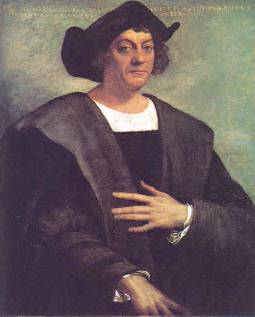
When was Columbus Day first established?
Columbus Day first became
a holiday in 1906 in Colorado,
and it officially became a federal holiday in 1937. In 1937, President Franklin D. Roosevelt
proclaimed Columbus Day a national holiday, as a result of
intense lobbying by the Knights of Columbus. Originally observed every October 12,
it was fixed to the second Monday in October in 1971.
Source: http://www.history.com/topics/columbus-day
Monday, September 17, 2012
How is the start of autumn determined?
On the first day of autumn
or the fall equinox, day and night are each about 12 hours long. Therefore the
Fall Equinox or the start of autumn is when day when night and day are of equal
length making the start of Autumn for September 22, more specifically in the
Northern Hemisphere on September 22 at 10:49 A.M. EST.
Source: http://www.almanac.com/content/first-day-seasons
Tuesday, September 4, 2012
What is a blue moon?
In the first half of the 20th century a blue moon was referred to as the third full moon of a season — spring, summer, winter or fall, that has four full moons instead of the usual three. But that definition was misinterpreted over the years, and today we call the second full moon in a single month a "blue moon."
Because a blue moon occurs only every two or three years, the term blue moon is used colloquially to mean a rare event, as in the phrase "once in a blue moon." Blue moons come along once every 2.7 years on average, and sometimes much more frequently. The next blue moon will not occur again until July 2015.
Source: http://www.space.com/17291-blue-moon-night-sky-friday.html
Subscribe to:
Posts (Atom)